


Safety and Certification
Peresvit mouthguards are certified in accordance with the European Regulation on personal protective equipment EU 2016/425 using the standard DD253:2001 for type 2 mouthguards (mouth-adapted mouthguards).
The mouthguards are made from FDA-certified materials (EVA and TPR) that do not cause allergic reactions or sensitization. The materials are safe for prolonged contact with the oral mucosa.
This guide will help you fit a mouthguard that sits perfectly on your teeth in just a few minutes.
What You Will Need
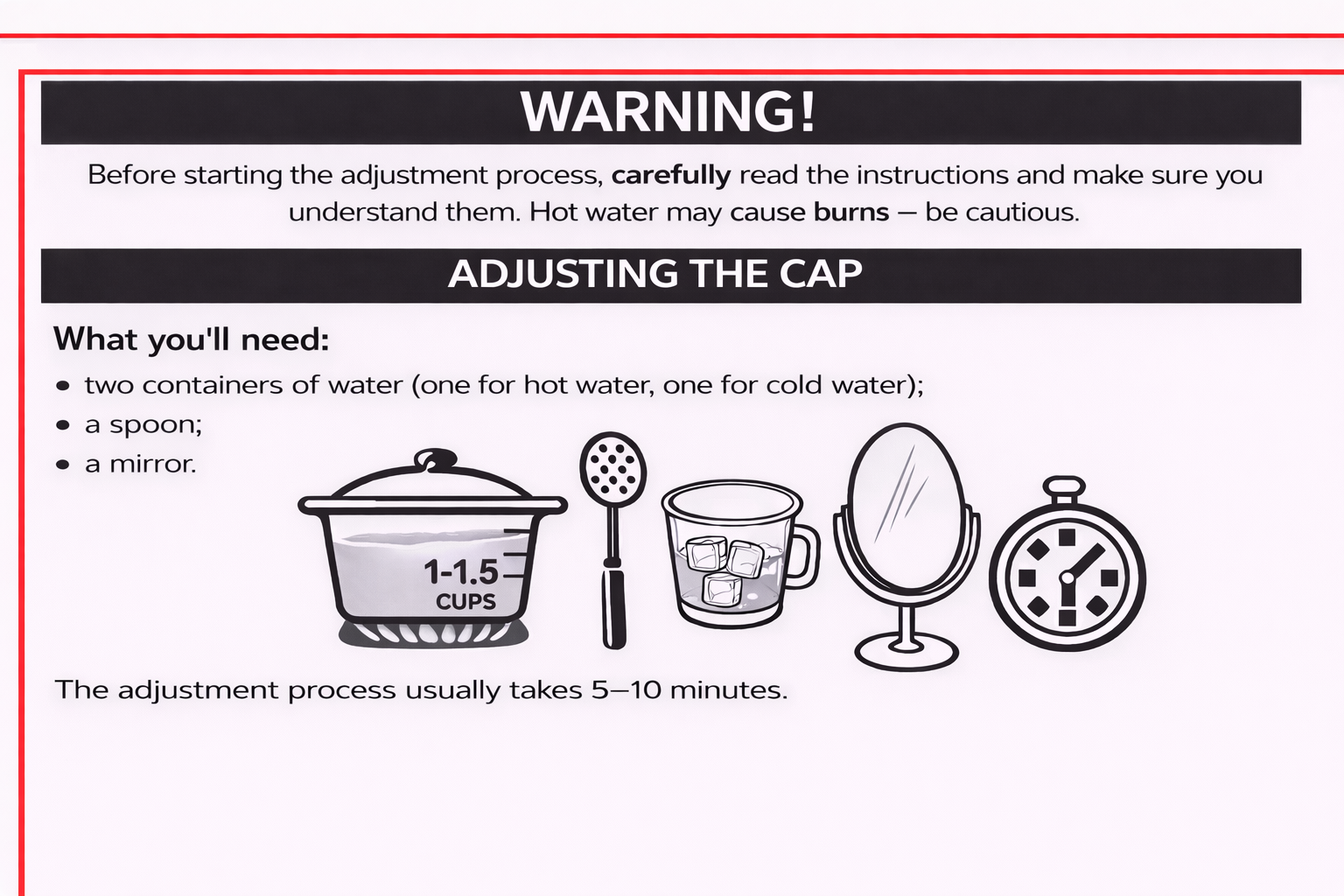
To fit your mouthguard, you will need:
- two containers of water (one for hot water, one for cold water);
- a mouthguard;
- a mirror.
The fitting process usually takes 5–10 minutes.
Step-by-Step Instructions:
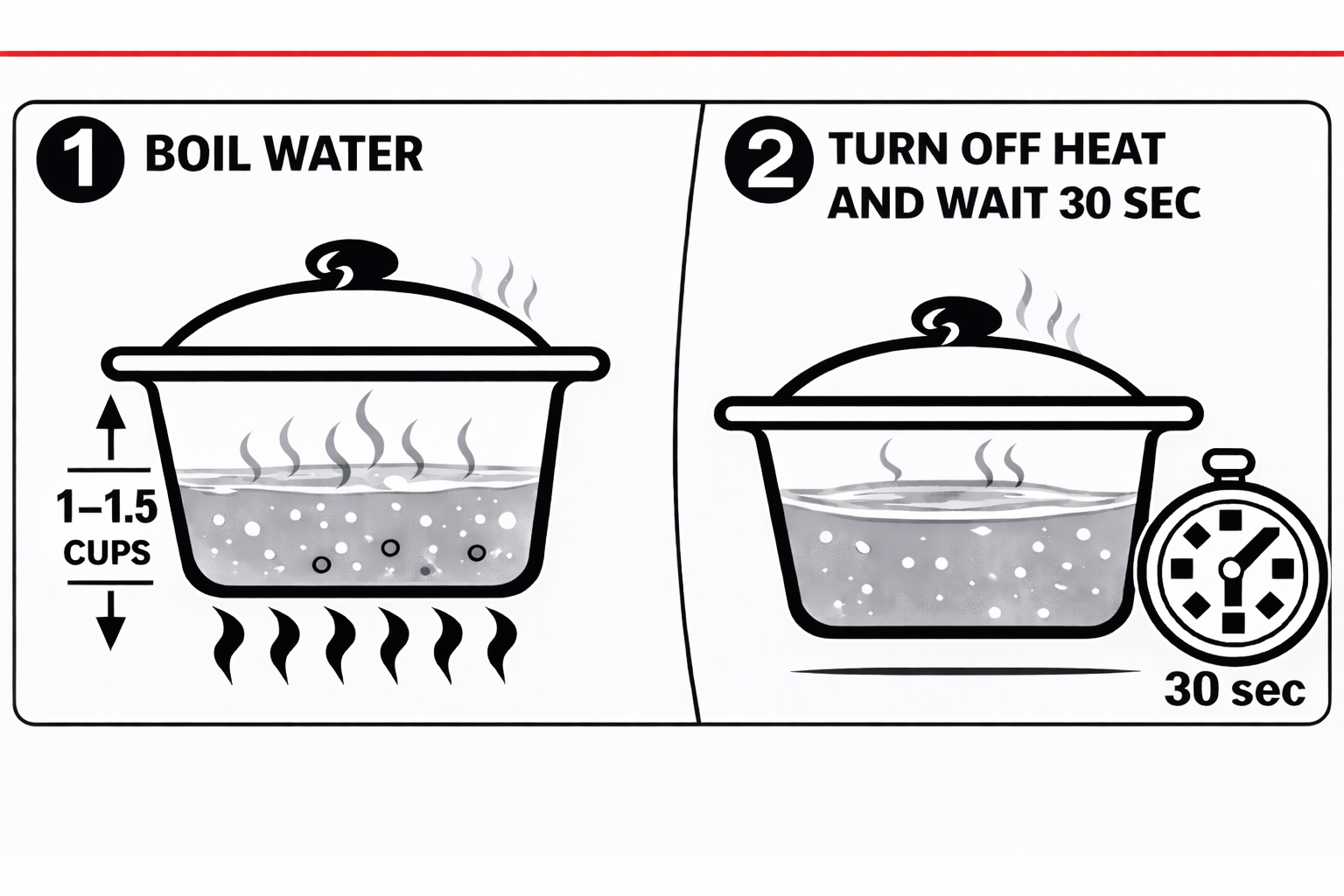
- Boil 1–1.5 cups of water.
- As soon as the water boils, turn off the heat and wait 30 seconds.
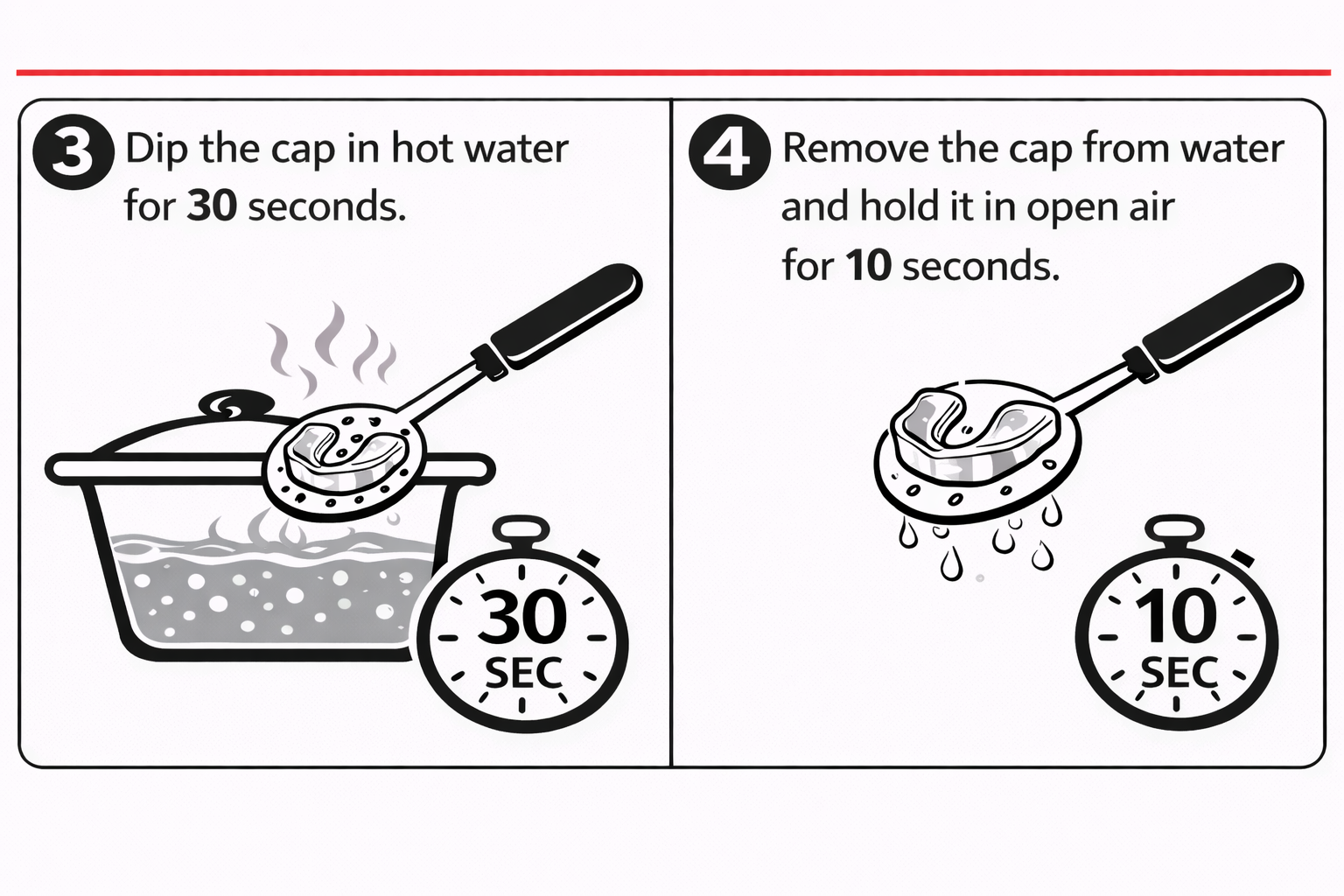
- Place the mouthguard on a spoon and carefully submerge it in the hot water for 30 seconds.
- Remove the mouthguard from the hot water and hold it in the air for 10 seconds.
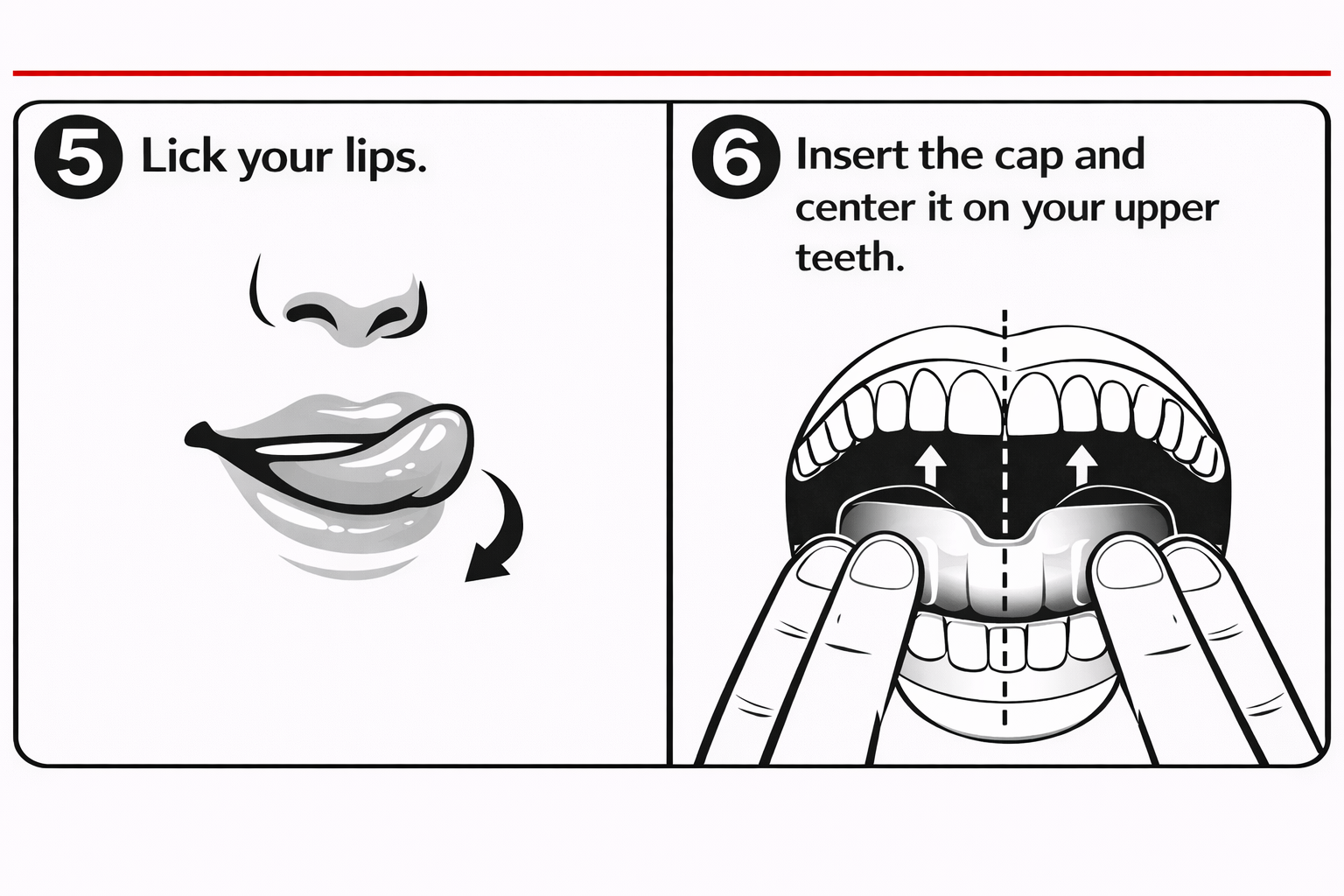
- Lick your lips so that the mouthguard does not stick to them.
- Insert the mouthguard into your mouth and center it:
- while looking in the mirror, slowly insert the mouthguard into your mouth, centering it on the upper jaw;
- make sure it is not crooked.
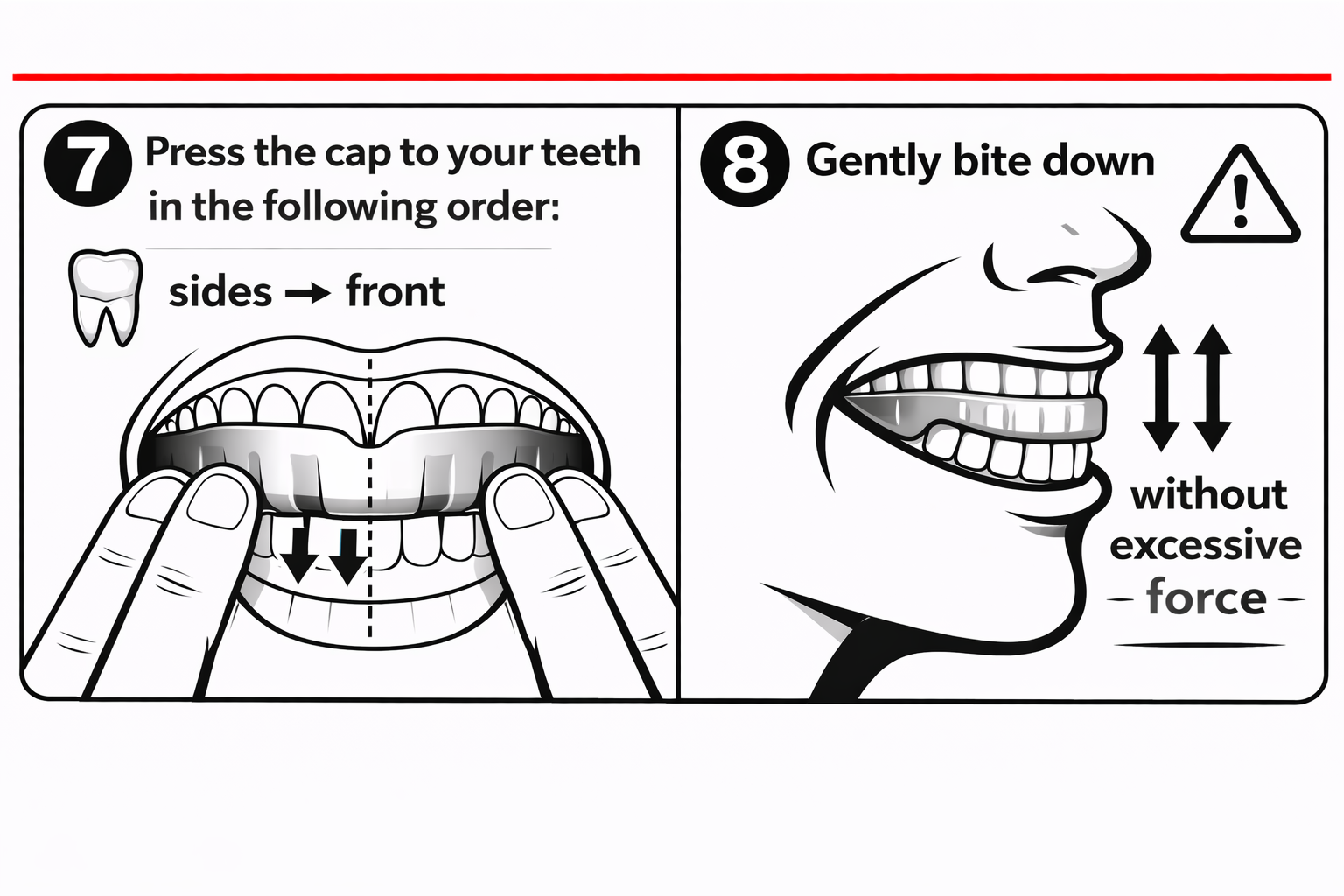
- Press the mouthguard against your teeth in the following order:
- back teeth (molars);
- front teeth.
- Bite down so that the mouthguard fits all of your teeth. Do not bite down too hard.
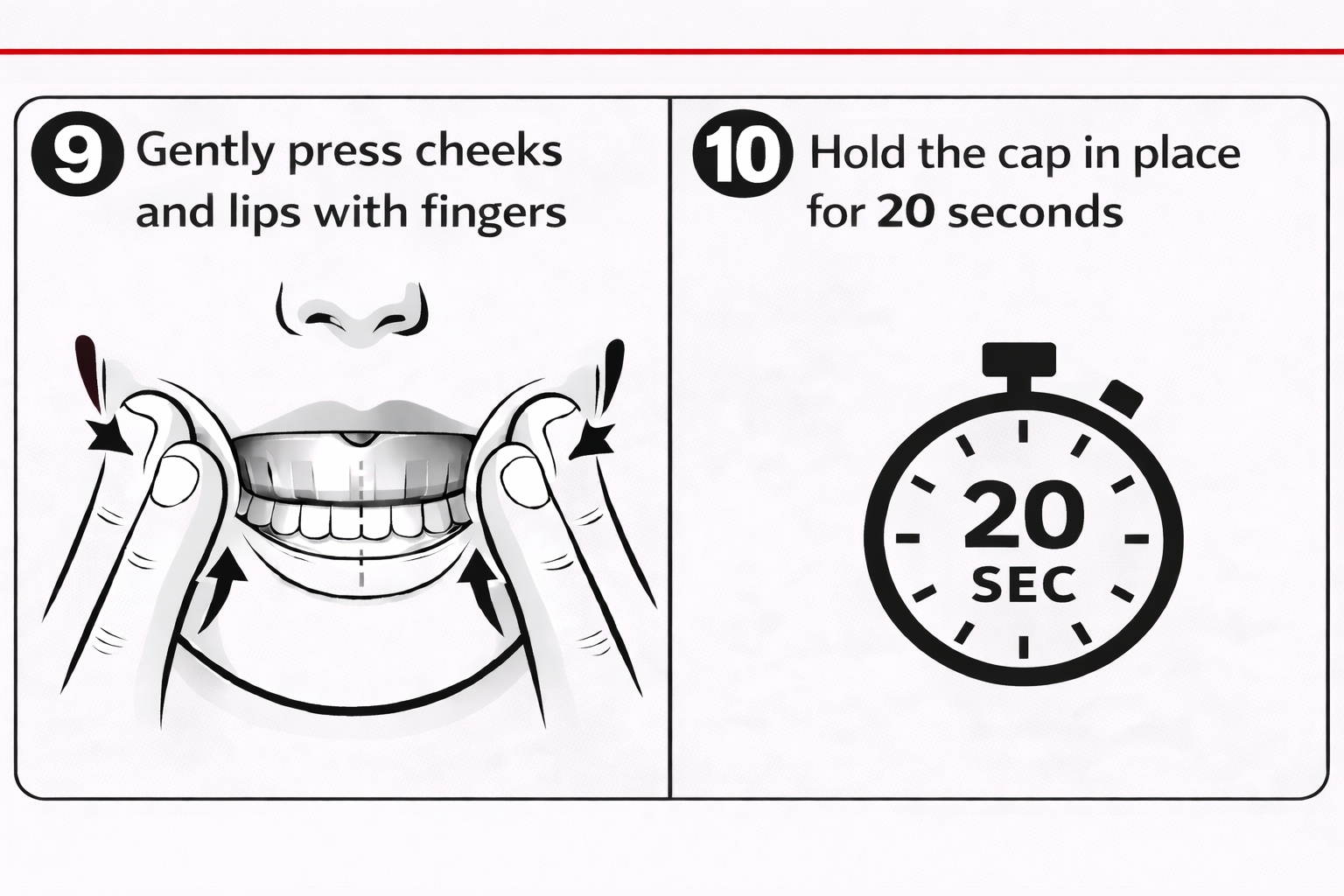
- Gently press your cheeks and lips with your fingers — this improves the fit.
Important! Do not move the mouthguard in your mouth and do not move your jaw during this process — just hold it in one position and keep your teeth clenched.
- Keep the mouthguard pressed for 20 seconds.
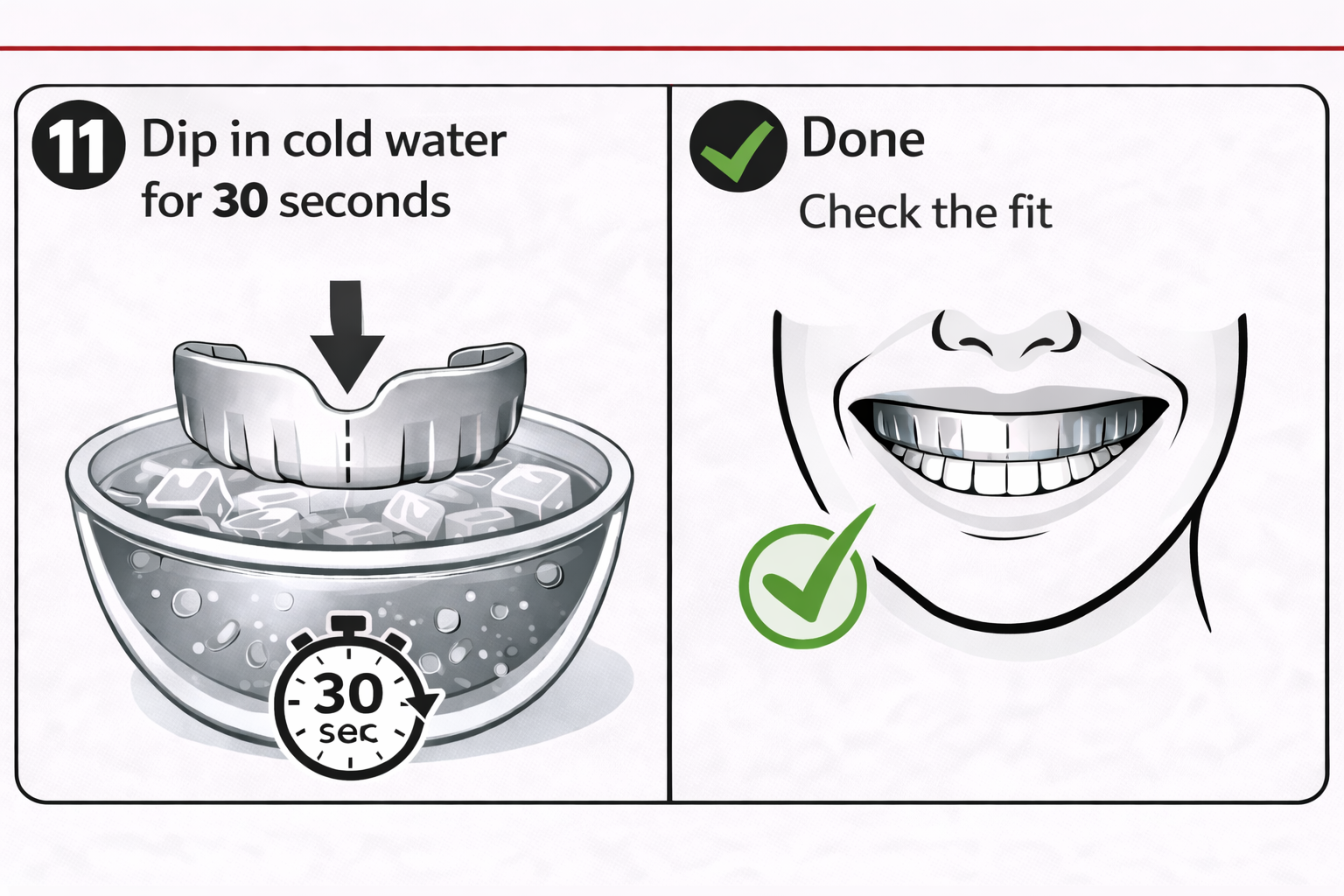
- Remove it and place it in cold water for 30 seconds.
Once the mouthguard has completely cooled, check the result. If it fits loosely, causes discomfort, or feels unstable, repeat steps 3–11.
Troubleshooting Common Issues
| Issue | Solution |
| The mouthguard feels too loose | Repeat the process — you may need to apply more pressure while fitting. |
| The mouthguard rubs the gums | Keep the mouthguard in hot water a bit longer (40–45 seconds) and press it more gently. |
| The mouthguard pinches the cheek | Reduce the pressure when pressing, or repeat the process with less force. |
| The mouthguard does not cover the back teeth | Press the mouthguard more firmly against the molars (the sides). |
| The mouthguard is very tight | Allow it more time to cool before inserting. |
| The mouthguard triggers a gag reflex | This is a normal reaction to a new object in your mouth. It usually goes away after a few training sessions. Try wearing the mouthguard at home for a few minutes at a time, gradually increasing the duration until the sensation becomes familiar. |
| The mouthguard feels too long and presses on the back teeth | You can carefully shorten the mouthguard at the back: cut off a small section in the area of the back teeth with a sharp knife or scissors, round off the edges and, if necessary, briefly reheat the mouthguard in hot water to smooth the edge. It is important that no sharp corners remain. |
When Should You Replace Your Mouthguard?
Replace your mouthguard if:
- it has become brittle or cracked;
- the material has lost its shape and no longer fits snugly;
- it has deformed due to improper storage.
A high-quality mouthguard will last 1–2 years with proper use and care.